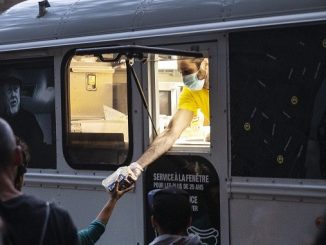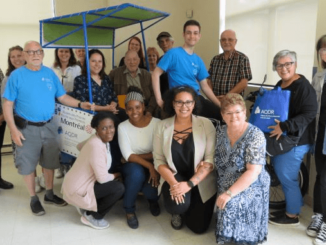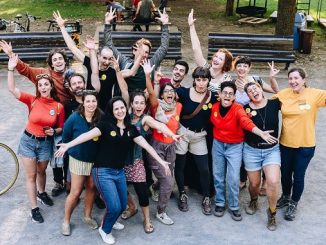
At the heart of Montréal’s frontline response to homelessness and social exclusion is St. Michael’s Mission, a place where basic needs meet pathways to long-term wellbeing. We spoke with Executive Director Andrew Marrocco about the Mission’s evolution, the growing challenges facing vulnerable communities, and what it truly takes to keep the door to community open for all.
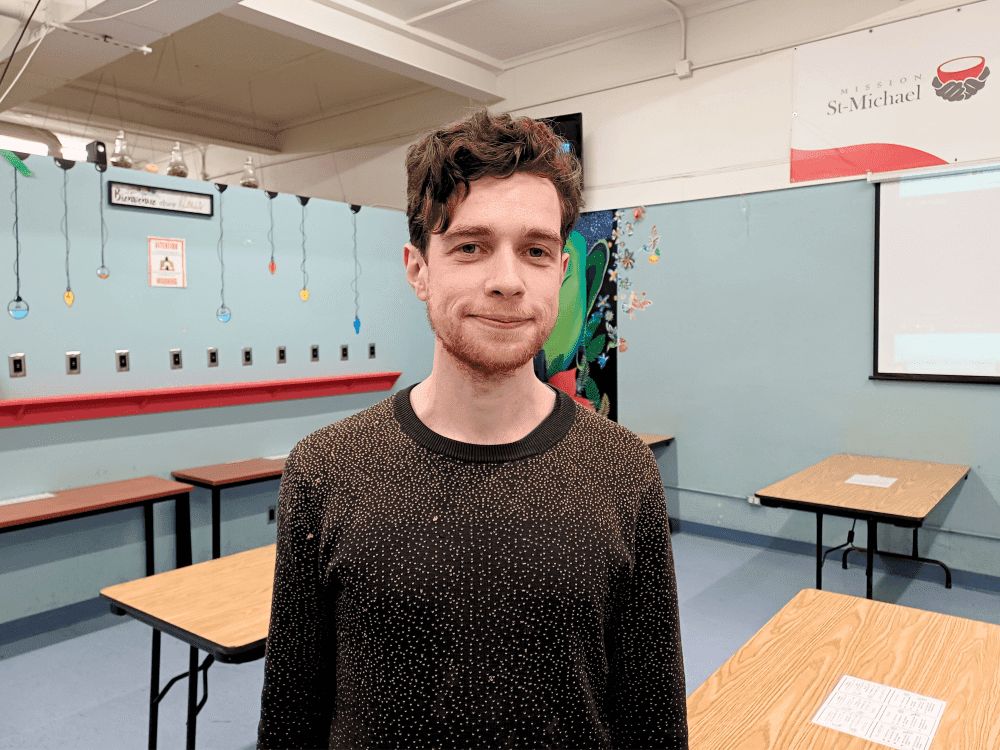
Describe your charity/non-profit/volunteer work in a few sentences.
Our aim is to prevent social exclusion by providing a space that is accessible for anyone facing situations of acute insecurity where the most basic needs are met, and reliable pathways to wellbeing and reintegration can be found. Our guests may experience any combination of homelessness, food insecurity, psychological conditions, addiction or physical health impairments, among other situations of vulnerability.
What problem does it aim to solve?
Our aim is to help eliminate the gaps in the welfare system that contribute to chronic exclusion and insecurity.
When did you start/join it?
I began my journey at St. Michael’s Mission as a volunteer in February of 2019, back when it was still under the famous Red Roof of St. John the Evangelist by Place des Arts, helping to serve hot meals and help our guests pick a new change of clothing. Since then, I’ve had the good fortune of gaining experience in a variety of roles, helping me to get an intimate understanding of the organisation and its history.
What made you want to get involved?
I stumbled on the organisation inadvertently in a twist of fate for which I am deeply grateful. The first time I volunteered, I was struck by the depth of our society’s shortcomings and the sincerity with which the community at St. Michael’s Mission welcomed individuals in situations of precarity and vulnerability. The feeling of being in that space and participating in simple but meaningful actions surrounded by people who care sincerely was both fulfilling and precious. Since then, I have had the chance to gain experience with several other organisations working with social need and that has made the authenticity of the experience I’ve had with St. Michael’s Mission all the more remarkable for me.
What was the situation like when you started?
There were only a handful of staff members at that time, so the whole operation was run quite fluidly, with little structure and a lot of volunteer involvement at every level! There was an intense rhythm; guests did not stay very long. While the atmosphere was always warm and welcoming, we weren’t able to offer much more than the most basic services and very simple meals (soup and oatmeal, maybe). Despite all of this, there was always a good atmosphere and moments of friction didn’t last long or go very far. The connection between the volunteers and our guests was always warm and considerate, even if sometimes the circumstances required a bit of stern discipline at times… While it was rough around the edges, St. Michael’s Mission had a distinctive way of making everything work regardless of the challenges.
How has it changed since?
Since the pandemic, our organisation has evolved in many ways. Most notably, we have changed location, now finding ourselves in the core of the financial district, between Place du Canada, the Bell Centre and Windsor Station. We have 15 employees and offer a wider continuum of services that includes a weekly food bank, a psychosocial intervention team that can provide short to long-term accompaniment and case follow-up, and a strong network of collaborations with external organisations to make a variety of social, health and bureaucratic services accessible on-site. At the same time, we still offer the basics: over 200 warm meals a day, access to showers and hygiene products, and at the heart of it all, a warm, welcoming space to spend time. Over the winter, we offer an emergency warming centre that runs 24/7 with a capacity of 60 people.
While we are still a front-line organisation serving basic needs of those who have fallen through the cracks, we have evolved to offer a continuum of services and referral networks that make transitioning out of precarity the primary focus of our work. It’s clear that the broader context is one that is becoming more and more challenging, creating deeper social divides and challenging our society’s capacity to take care of itself. We are committed to the idea that the door to community is always open in a healthy society, and our city has the potential to innovate and lead by example in this regard despite the challenging circumstances of our times.
What more needs to be done?
There are many organisations working with Montréal’s vulnerable communities, but they are often left without reliable means to offer their services. The instability of funding in our sector while dealing with the multifaceted needs of individuals requiring access to any combination of stable accommodation, psychological treatment, addiction services, and clinical care (not to mention a hot meal, a pair of socks, or a shower), makes it particularly challenging to provide the continuity and stability that our community needs.
Our organisations also have to be better supported through coordination and direct involvement of public institutions, as we cannot handle today’s social crises on our own, despite the innovative solutions we have found to respond to our community’s needs. We cannot eliminate social exclusion and insecurity when there are gaps in the system.
How can our readers help?
Above all, we have to remember the humanity of those who are struggling the most. We can’t forget as a society that the issues arising in public spaces are caused by deep cracks in our social services and healthcare system, and that the solution is to make it possible for our community’s most vulnerable to be given the opportunities they need to find stability and care.
Whether it be by volunteering, supporting our organisation or another through donations, or by raising awareness of the importance of our work, these are all powerful means of affecting social change. Anything that we as individuals can do to participate and help others participate in our community is essential, even if it’s as simple as interacting with our society’s most vulnerable with care, respect and understanding.
Do you have any events coming up?
We are running our 24/7 emergency warming centre from December through March, and several generous groups are helping us prepare special meals over that period. These are essential moments of warmth and light in the midst of the difficult winter season.
Where can we follow you?
Website | Instagram | LinkedIn
PAY IT FORWARD: What is an awesome local charity that you love?
There are too many to name! Given the constant love they give us, I would have to say Bread and Beyond deserves a little more recognition for the wonderful work they do across the city.