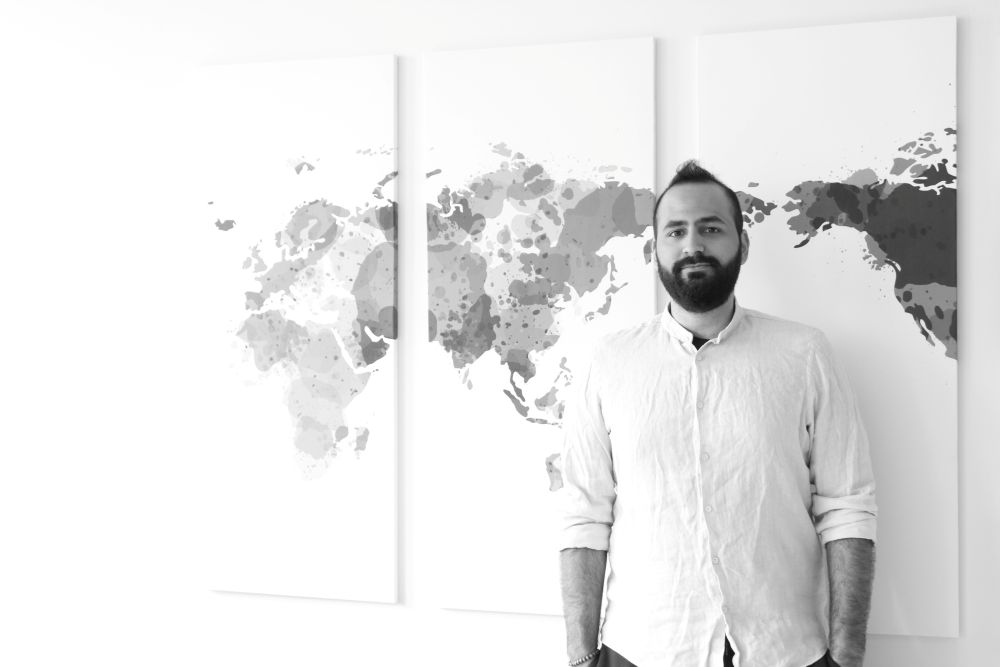
In Montreal, where the refugee experience often collides with complex bureaucratic systems and fragmented services, one organization has emerged as a model for holistic, person-centred care. Co-founder and Executive Director Kinan Swaid leads The Refugee Centre, a nonprofit dedicated to supporting refugee claimants and asylum seekers through every stage of resettlement. Since its founding in 2015, the Centre has become a cornerstone for newcomers, offering integrated legal, health, housing, and educational services — all grounded in dignity, advocacy, and cultural understanding.
Describe your charity/non-profit/volunteer work in a few sentences.
The Refugee Centre is a nonprofit organization based in Tiohtià:ke/Montreal that was founded in 2015. We began as a grassroots initiative and have since grown into a leading frontline organization for refugee claimants and asylum seekers. Our work is organized across five frontline service departments: (1) the Legal Clinic; (2) Settlement and Integration; (3) Health and Wellness; (4) Transitional Housing; and (5) the Learning Centre. And of course, advocacy runs through all of our work. Every service we provide is informed by careful assessments of the obstacles refugees face that are then translated into policy recommendations and briefs to make key interventions in the broader system and address structural gaps that impact refugee populations.
What problem does it aim to solve?
Montreal has many newcomer-serving organizations, yet most operate within narrow service streams, such as legal assistance, healthcare access, or academic guidance. Very few take an integrated, cross-sectoral approach. Simultaneously, refugee claimants remain particularly underserved. Due to restrictive funding criteria and service mandates, many institutions are unable to support refugee claimants (which refers to individuals who are still awaiting a decision on their refugee claim).
The Refugee Centre aims to solve these problems. Our model is grounded in the understanding that refugee pathways are complex and interconnected. Housing insecurity, immigration status, income stability, health, and mental wellness cannot be separated from one another. The Centre provides holistic support that keeps the whole person in mind and doesn’t treat the problem in parts.
When did you start/join it?
The organization was founded in 2015 during the Syrian refugee crisis, when Canada committed to welcoming around 25,000 refugees. At the time, some of us were already involved in student-led initiatives supporting arriving Syrian families. Through that work and experience, we observed significant gaps in the accessibility of services, or lack thereof. We saw people who were promised brighter futures struggle to navigate legal processes, academic systems, orientation services, and language programs. We realized that in order for this work to be effective, we needed to provide comprehensive and structured assistance to newcomers.
What made you want to get involved?
I come from a refugee family, so this work is deeply personal for me. Growing up, I heard stories about what it means to flee persecution and rebuild a life from scratch. What always stayed with me was how, alongside the hardships, dignity can be lost in the process, especially when systems are not built with the entire person in mind.
Those experiences shaped my conviction that people seeking safety should never feel like an afterthought. I wanted to help create the kind of support system my own family would have benefited from, one that offers dignified pathways for people. This is why I got involved, because I believe this future is possible, and I want to be part of building that future.
What was the situation like when you started?
When we first began, services for newcomers in Montreal were present, but we noticed a lack of cultural understanding. During the arrival of Syrian refugees in 2015, it became clear that many institutions were not equipped to engage with diverse cultural backgrounds or the realities of forced displacement. We saw this gap with Syrians, yes, but we quickly understood that it was systemic and affected refugees hailing from many different regions.
At the same time, the provincial system did not include refugee claimants in many supports, which, to an extent, remains true to this day. Claimants were shut out of key programs, and in some cases, even basic rights like access to elementary education for minors and work permits were unclear or inconsistently applied. These barriers left people, already vulnerable, in an extremely precarious situation, and very few organizations could help them navigate it.
Basically, there was really no institutional backing for what we were trying to build … We relied on community trust and building personal relationships, and meeting people where they were. We visited hotels near airports, presented information sessions in Arabic, spoke with people one-on-one, and slowly we built a reputation for being present and reliable. People came to us because they heard we would listen and understand. Of course, the fact that we shared a culture and language really helped, and those early years shaped our philosophy at the Centre today. Cultural competency is a critical pillar for us. Today, our team can serve people in over 6 languages, and our priorities and work shift as the landscape changes.
How has it changed since?
Like I said, some things haven’t changed. Refugee claimants still face some of the most significant barriers in accessing basic services and opportunities. Higher education remains largely out of reach, and provincial services are not consistently accessible in languages other than French after 6 months. There has been progress, of course. For example, access to elementary education has now been granted not just to refugee claimants but also to undocumented children.
For our organization, we’ve made a lot of changes to respond to the shifting and critical needs of the people we serve. We began as a small team responding to immediate needs, but over time, we formalized and expanded our services to reflect the full spectrum of support that newcomers require. Today, we have dedicated departments for health and wellness, employment support, a learning centre, a transitional housing program, an advocacy department, and a centralized intake and case management system to provide psychosocial support. The core mission remains the same, but our capacity, expertise, and infrastructure have grown.
What more needs to be done?
We just spoke about all these changes, and we welcome them because they’re so important. But, today, we’re seeing a severe housing crisis – one that disproportionately affects refugees – and yet they are the ones being scapegoated and blamed for the crisis. These are the same people who were being blamed and scapegoated when I first started this work in 2015. So there is still a lot of work to be done on the level of consciousness and myth-busting.
Fundamentally, we believe that integration should be dignified, not transactional. The support that refugees require is, at its core, the same support any Canadian would need to thrive. This means investing in affordable housing, improving access to education, and ensuring real access to healthcare. In short, creating the conditions that allow people to climb the socioeconomic ladder.
Social integration cannot happen without economic integration, and economic integration cannot happen without academic integration. That is why our approach is holistic and long-term. We focus on creating programs that empower people to build self-reliance and independence, rather than creating temporary fixes. We want to offer refugees, who come here with skills, dreams, and ambitions, with the tools to fully participate in society with dignity and stability.
How can our readers help?
In 2021, we created our Pay It Forward Fund to provide direct emergency support to newcomers and refugees. The idea came when two generous donors approached us and wanted their contributions to have an immediate, tangible impact. This fund is unique because 100% of every donation goes directly to people in need– none of it goes to administrative or overhead costs. Supporting the Pay It Forward Fund is a way for readers to make a real difference in the lives of individuals and families navigating the challenges of resettlement.
Do you have any events coming up?
We have recurring workshops and activities for newcomers and refugees. These include CV validation workshops, health paperwork guidance, legal clinics, and more. We also host regular community activities such as movie nights, yoga sessions, and other social events. All our workshops and activities are free, and you can find the full calendar on our website.
Where can we follow you?
You can follow the Refugee Centre on Instagram, Facebook, and LinkedIn. Tune into our bi-weekly episodes on our podcast called Point of Entry. You can also subscribe to our mailing list, also available on our website, where we send regular updates on our workshops, services, events, etc.
PAY IT FORWARD: What is an awesome local charity that you love?
One organization that I’d love to highlight is the Community Engagement Project (CEP) – a volunteer-led initiative that supports community building and access to basic services. They lead fundraisers, distribute food to individuals and families in need, and host recurring community-based events. A key example is their annual back-to-school initiative that distributes essential school supplies to every attendee, regardless of status. We always feel confident when we refer someone to a CEP event because we know the support they’ll get is thoughtful and dignified.