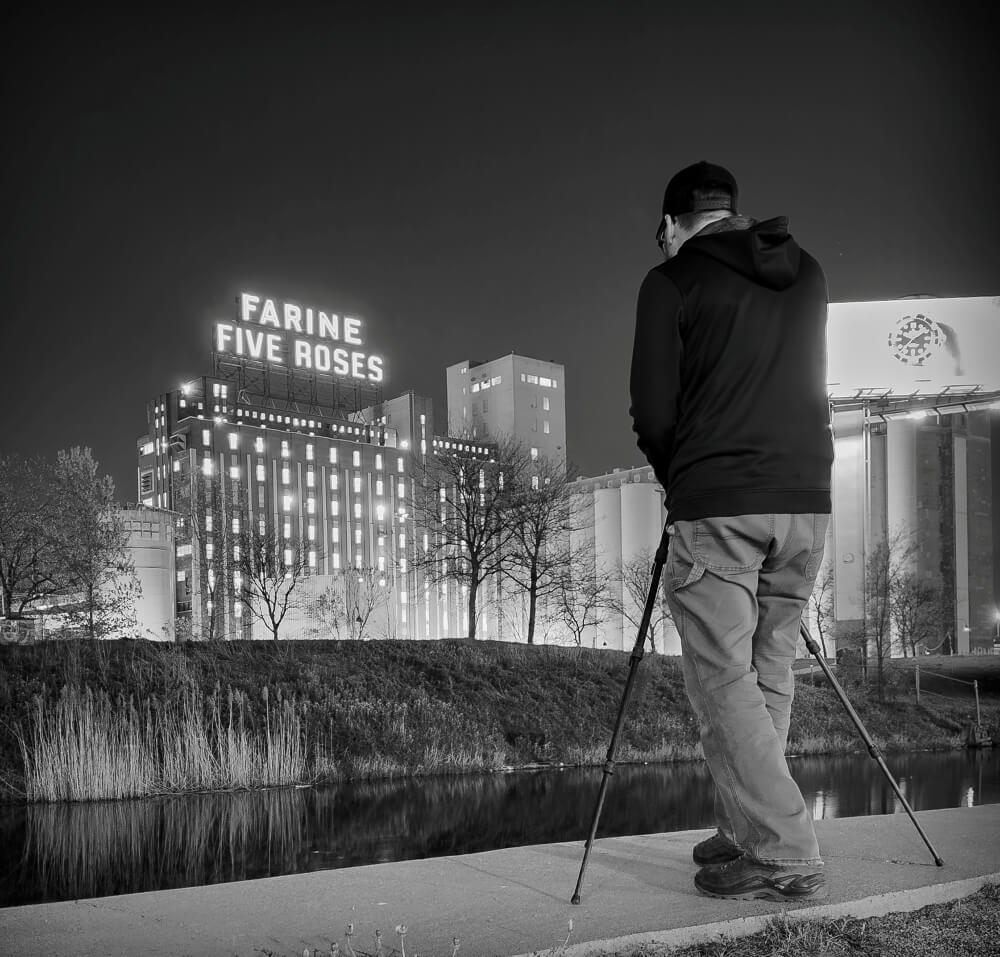
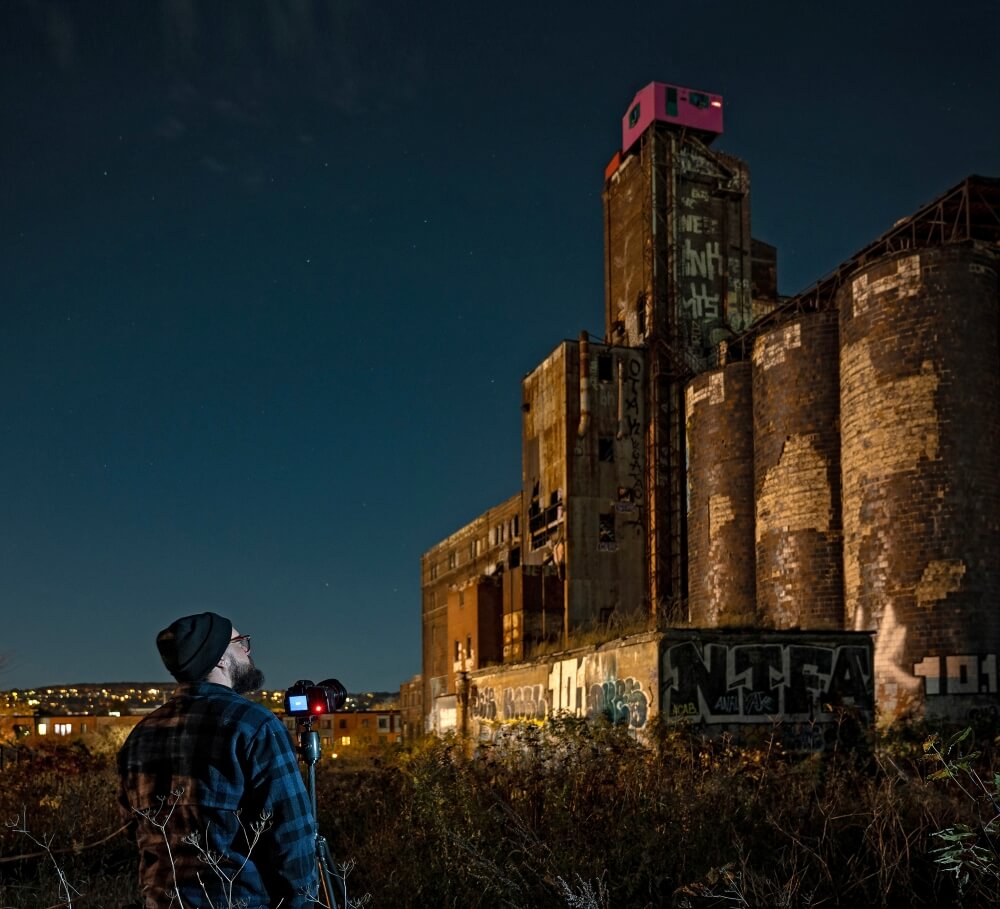
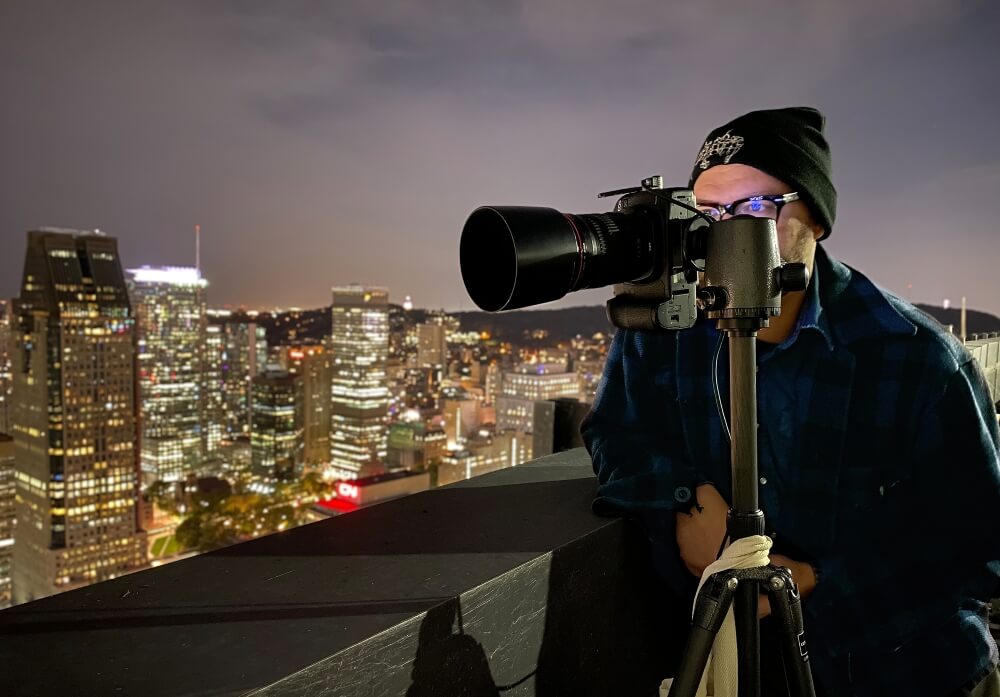
With Pascal Normand, an artwork never simply appears on a wall. It comes with scouting trips, night shoots, getting home late, images reworked until they hold together, canvases in progress, exhibitions to set up, talks to give, writing to do, submissions to prepare, and another project underway. He works constantly, with a kind of quiet stubbornness. What I love about Pascal’s eye is that he notices what many people pass by too quickly: a building, a sign, a bridge, a street, a light in the night. He looks at these places long enough for them to start telling us something again. In his work, they take on a presence, with their marks, their history, their memory. After that, you don’t see them quite the same way. His background in cinema still comes through in the way he approaches places. He doesn’t just photograph a setting; he looks for the character inside the place. He could talk at length about technique, because he knows exactly what he’s doing, but he stays accessible, direct, and never overdoes it. Day to day, what I see is an artist who is proud without being showy, demanding of himself, patient, and incapable of doing things halfway.
-Written by Loane Ouellet, Pascal Normand’s partner.
***
Which neighbourhood are you in?
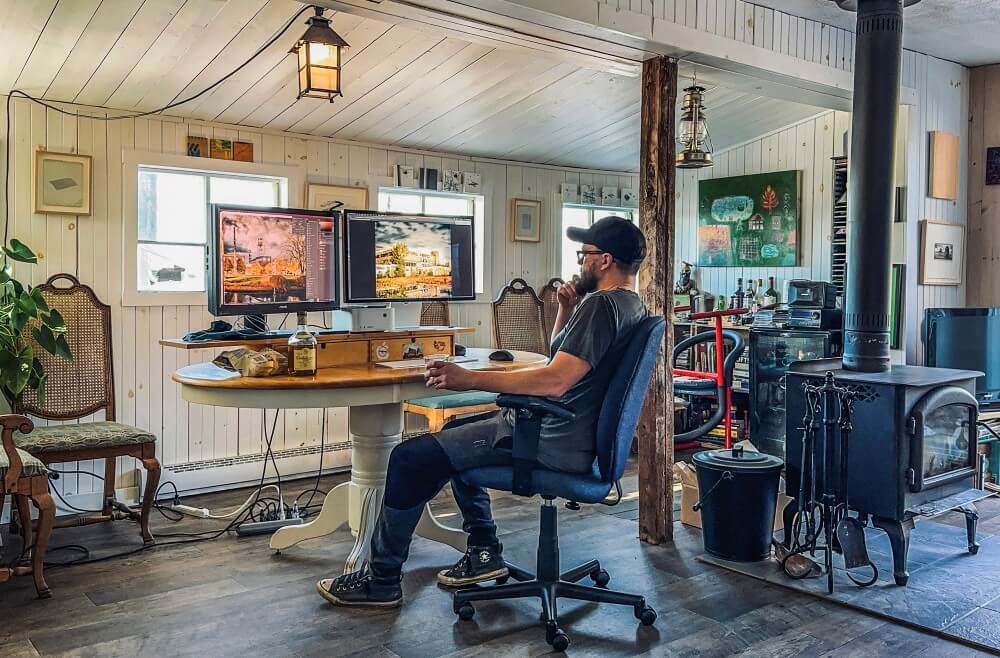
I am now based in Beloeil, on the South Shore of Montréal, where my studio is also located. But Montréal remains deeply tied to my work. I lived there for twenty years, from 1999 to 2019, and many of the places that shaped my visual language are in Montréal: Hochelaga, Saint-Henri, Pointe-Saint-Charles, the SudOuest, industrial areas, bridges, signs, old commercial buildings, and streets I first explored at night with a tripod. My daily life is now in Beloeil, but much of my artistic memory is rooted in Montréal.
What do you do?
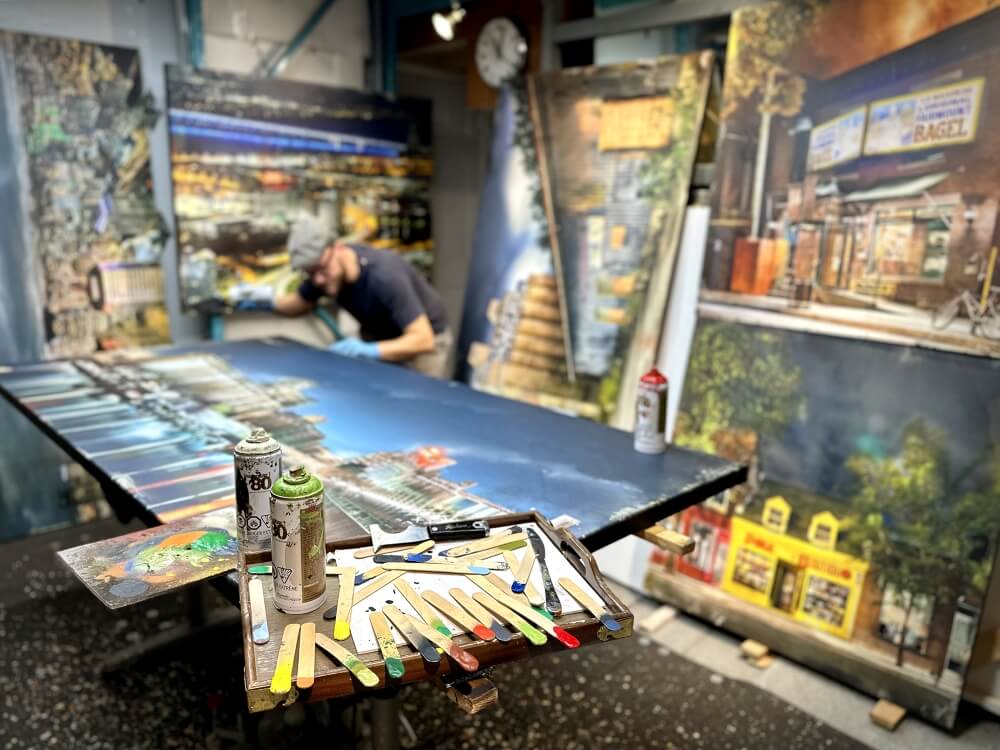
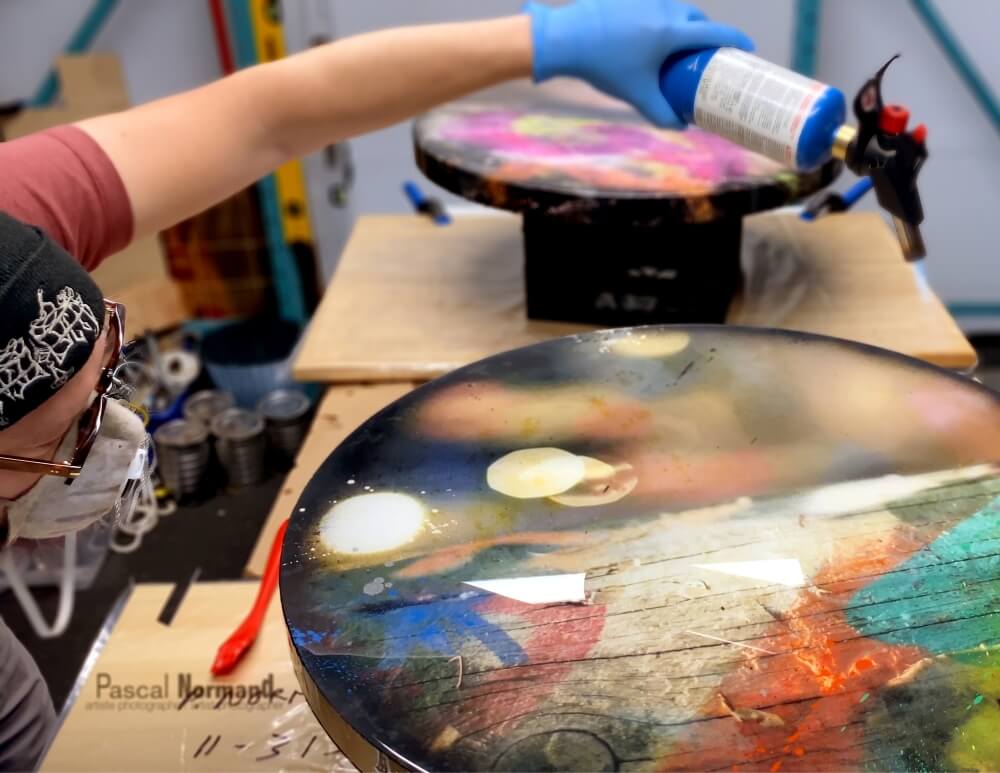
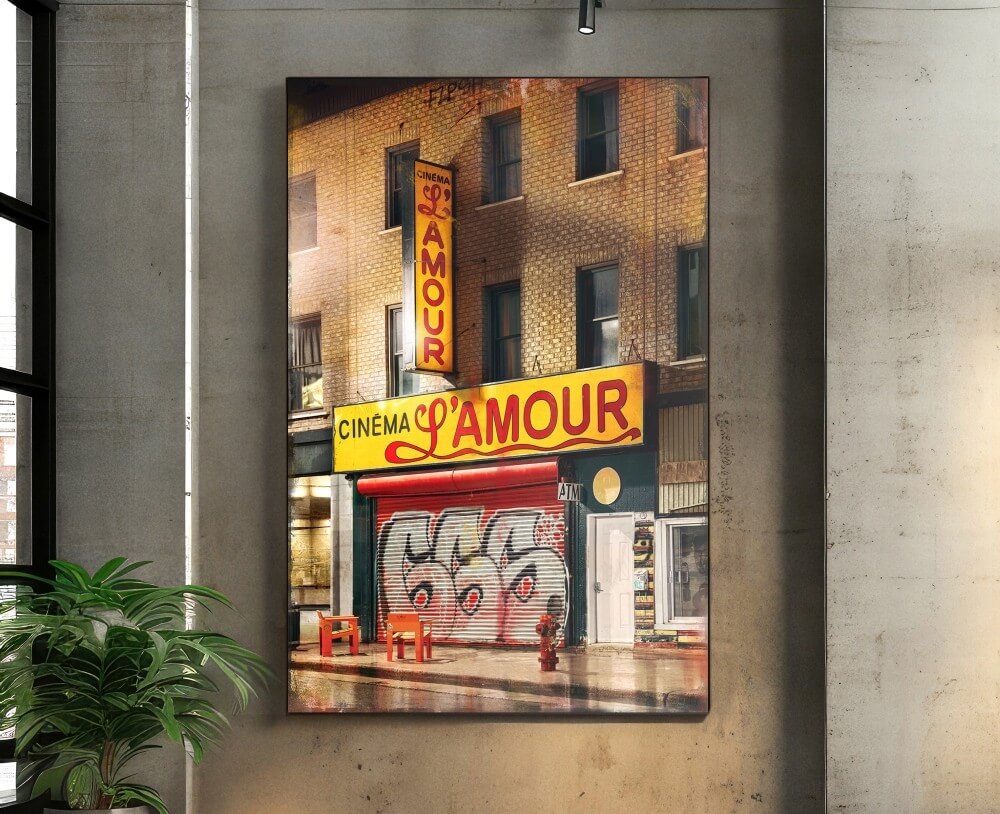
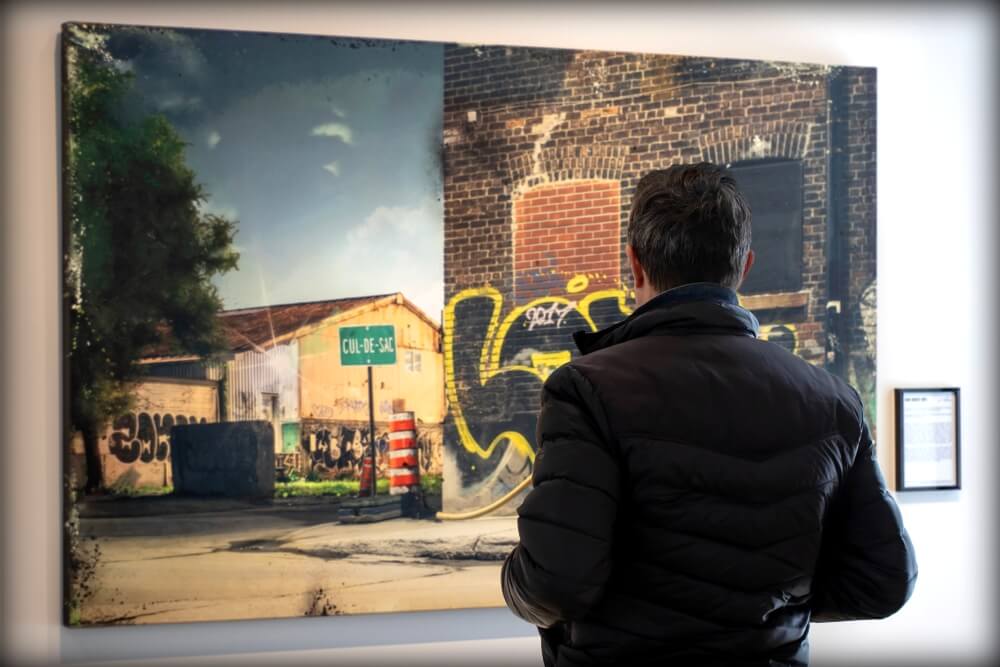
I am a visual artist working with mixed media. My process combines long-exposure night photography, digital recomposition, printing on canvas, and aerosol paint intervention. My subjects are mostly built places: industrial buildings, bridges, signs, old neighbourhood landmarks, commercial façades, and ordinary structures people often pass without really seeing. I am not trying to document them in a neutral way. I try to make the place feel present again, almost like a character with its own memory, tension, and story.
What are you currently working on?
A bit of everything, which is often the reality of being a full-time artist. I am developing new works, preparing submissions, writing project texts, working on exhibition material, and continuing to expand my main body of work on the built environment, memory, and identity. I am also revisiting Montréal and the Montérégie through night photography. Some places are well known; others are almost invisible in daily life. What interests me is the moment when a building, a sign, a bridge, or a street corner starts to feel charged with more than its practical function.
Where can we find your work?
The best place to start is my website. People can also see my work in exhibitions, outdoor public displays, art fairs, and cultural events throughout Québec. I welcome visitors to my studio in Beloeil by appointment, where they can see finished works, pieces in progress, and the material side of the process. I am also active on social media under Pascal Normand Artiste Photographe, where I share new works, exhibitions, studio views, night shoots, and upcoming projects.